
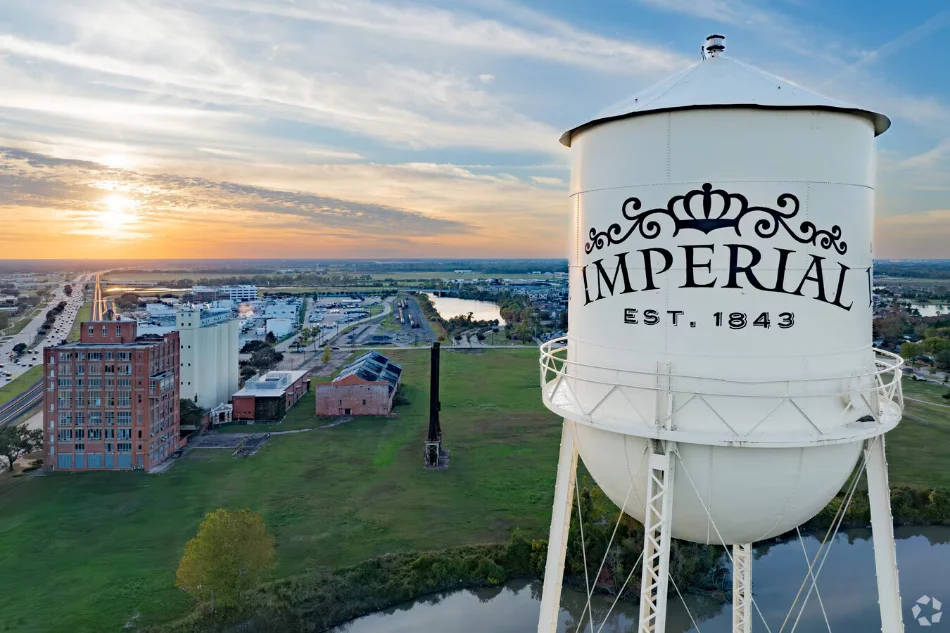
Sugar Land, Texas
Your local guide to buying and selling homes in Sugar Land — from established First Colony and Sugar Creek to newer Telfair and Riverstone, all backed by Fort Bend County expertise.
Fort Bend County's Established Address
Experience Sugar Land, Texas
Sugar Land started as a company town for the Imperial Sugar Company, and that history still shapes the place. It incorporated in 1959 and grew into one of the largest cities in Fort Bend County, not by staying small and quaint like Richmond's historic core, but by building out a string of large master-planned communities decades before Fulshear or west Katy existed. SLB (formerly Schlumberger) runs a 200-acre technology campus here with more than 2,000 employees, Fluor and ChampionX both have a major presence, and Sugar Land Regional Airport handles corporate jet traffic for more than 100 Fortune 500 companies. A meaningful share of residents work in the city itself instead of commuting into Houston.
What sets Sugar Land apart from the newer suburbs the team also covers is how finished it already is. Sugar Creek was built in 1970, First Colony went up through the 1980s and 1990s, Greatwood followed in the late 1980s, and New Territory filled in through the 1990s and early 2000s. The city annexed most of these communities years ago and retired or absorbed their MUD debt in the process, so older sections like First Colony carry a total tax rate around 2.55 to 2.65 percent, lower than the 3-plus percent common in Fulshear's and Katy's newer construction. Telfair and Riverstone are the exceptions, built more recently and still carrying newer infrastructure debt.
Fort Bend ISD zones most of Sugar Land, with one notable pocket of Greatwood zoning instead to Lamar CISD. Commutes run 20 to 30 minutes to the Energy Corridor and 30 to 45 minutes downtown via US 59/69, depending on the section and time of day. If you want mature trees, finished retail, and a lower effective tax rate today, Sugar Land beats Richmond and most of Fulshear on that trade. If you want the newest floor plans at the lowest entry price, you'll do better looking west toward those same cities. We'll walk you through which section actually fits your budget and your commute.
Search PropertiesCommunity Info
Sugar Land, Texas Real Estate Market
Market stats placeholder — send the IDX saved-link and widget IDs.
Search Properties
Homes for Sale in Sugar Land, Texas
Listings widget placeholder — send the IDX saved-link and widget IDs.
Neighborhoods
Popular Communities in Sugar Land, Texas
First Colony
One of Sugar Land's largest and oldest master-planned sections, spanning more than 9,000 acres in the southern part of the city, built out mostly through the 1980s and 1990s. First Colony Mall and a dense retail corridor sit inside the community rather than a drive away. Most of its MUD bonds have already been retired, putting the total tax rate around 2.55 to 2.65 percent. Zoned to Fort Bend ISD, with seven elementary schools and two high schools serving different parts of the community, so confirm the specific campus before you buy.
Search PropertiesTelfair
Sugar Land's newest large-scale master plan, more than 2,000 acres running from US 90 Alternate down toward Highway 6 and US 59. Thirteen builders, including Perry Homes, Pulte, David Weekley, and Taylor Morrison, filled out the Model Home Village here, with homes originally priced from the $250s to well over $1 million. New construction has mostly wrapped up, so most listings today are resales. A mixed-use core with office towers along the Sugar Land Business District sets it apart from the city's older, purely residential neighborhoods.
Search PropertiesGreatwood
Developed in the late 1980s around a public golf course, with more than 4,000 homes spread across a dozen parks and mature pecan and oak trees. Most of Greatwood zones to Fort Bend ISD, but one section zones instead to Lamar CISD and feeds George Ranch High School, so never assume the district without checking the address. The pace here runs quieter than Telfair or Riverstone, and lots tend to run larger than in Sugar Land's newer sections.
Search PropertiesNew Territory
A 3,200-acre community built out through the 1990s and early 2000s, with more than 4,600 homes arranged around lakes, parks, and a central recreation complex. Zoned entirely to Fort Bend ISD. It sits close to US 90 Alternate and the Grand Parkway, and its retail and restaurants are already established rather than still filling in, unlike comparably sized communities in Fulshear or west Katy.
Search PropertiesSweetwater
A gated, upscale section built around Sweetwater Country Club, with luxury listings currently running from roughly $600,000 to $6 million. Custom homes on larger lots dominate the streets here. It draws buyers who want privacy and an established country-club lifestyle without leaving Sugar Land.
Search PropertiesSugar Creek
One of Sugar Land's oldest neighborhoods, developed in 1970 around Sugar Creek Country Club and its 27-hole Robert Trent Jones Sr. golf course near Dairy Ashford and US 59. Large, mature lots and custom-built homes define the streets. If you want the most established feel Sugar Land offers outside its historic downtown, this is it.
Search PropertiesImperial
Built in and around the site of the old Imperial Sugar refinery, near Sugar Land Town Square and the historic downtown, with homes generally running $500,000 to $1 million. The city has been acquiring pieces of the historic refinery site, including the eight-story Char House, for a mixed-use redevelopment that has moved slowly but keeps this pocket of Sugar Land in the middle of ongoing investment.
Search PropertiesAvalon
A smaller, 427-acre community made up of five connected subdivisions wrapped around a 70-acre lake, with a community pool and green space rounding out the amenities. It's a lower-key option than Telfair or Riverstone, sized for buyers who don't need a resort-style clubhouse to feel settled.
Search PropertiesRiverstone
A nearly 3,900-acre Johnson Development community off Highway 6, south of US 59, shared between Sugar Land and Missouri City. Always confirm which side a specific address falls on, since it affects city services and the tax bill. Homes range from patio product to custom estates around a system of lakes. Riverstone's MUD is newer and still paying down bonds, so its total tax rate runs closer to 3.0 to 3.1 percent, noticeably higher than Sugar Land's older, paid-off sections.
Search PropertiesClient Reviews
See What Our Clients Have to Say
Sugar Land, Texas FAQs
Answers to the Most Common Questions About Buying and Selling in Sugar Land, Texas
Fort Bend ISD zones most of Sugar Land, and it's one of the largest districts in the state at more than 76,000 students across 82 campuses. One notable exception is a section of Greatwood, which zones instead to Lamar CISD and feeds George Ranch High School. Always confirm the zoned campus for a specific address before you buy, since assignments inside large communities like First Colony can vary from one part of the neighborhood to another.
Sugar Land is the most built-out and established of the three. Richmond still has room to grow and generally costs less for comparable square footage. Katy is closer in size and maturity but spreads across three counties and skews toward newer product, while Sugar Land's older sections, First Colony and Sugar Creek among them, were built decades ago and already paid off their MUD debt, which keeps effective tax rates lower than what you'll find in Katy's or Fulshear's newer communities. If you want established trees, finished retail, and a lower total tax rate today, Sugar Land wins. If you want the newest floor plans at the lowest entry price, look toward Richmond or Fulshear instead.
Plan on roughly 20 to 30 minutes to the Energy Corridor via US 59/69 or the Westpark Tollway, depending on your section and the time of day. Downtown Houston runs closer to 30 to 45 minutes on US 59/69, longer during peak traffic. Sections near Highway 6 and the Grand Parkway, like Riverstone, have more route options than neighborhoods closer to the older downtown core.
More than most Fort Bend suburbs. SLB, formerly Schlumberger, runs a 200-acre technology campus here with more than 2,000 employees, and Fluor and ChampionX, formerly Nalco Champion, both have a major presence. Add Houston Methodist Sugar Land and the corporate aviation traffic through Sugar Land Regional Airport, which handles flights for more than 100 Fortune 500 companies, and you get a city where a meaningful share of residents don't commute into Houston at all.
Not much, compared to Fulshear, Katy, or Richmond. Telfair still has a handful of new lots, but it's mostly resale inventory now. The one active story is the Imperial Historic District, where the city has been assembling the old Imperial Sugar refinery site, including the Char House, for a mixed-use redevelopment. If you want brand-new construction at scale, you'll find more current activity west in Fulshear or in Richmond's newer sections.
Less than you'd think, in the older sections. Sugar Land annexed most of its established communities years ago and retired or absorbed their MUD debt in the process, so First Colony now carries a total rate around 2.55 to 2.65 percent. Riverstone is the exception: its MUD is newer and still paying down bonds, putting its total rate closer to 3.0 to 3.1 percent. Always ask for the specific MUD and annexation status before comparing two Sugar Land addresses on price alone.
No. Sugar Land is its own incorporated city in Fort Bend County, with its own city government, police department, and Sugar Land Regional Airport. It sits about 20 miles southwest of downtown Houston along US 59/69, close enough for an easy commute but governed and taxed separately from the City of Houston.
Ready to Find Your Place in Sugar Land, Texas?
Whether you're weighing Fort Bend ISD boundaries against that one Lamar CISD pocket in Greatwood, comparing an established section like First Colony against newer Riverstone, or trying to figure out what a Sugar Land home actually costs once the tax rate is factored in, we'll help you find the right fit and negotiate the best deal, backed by local Sugar Land and Fort Bend County expertise.
Schedule a Consultation